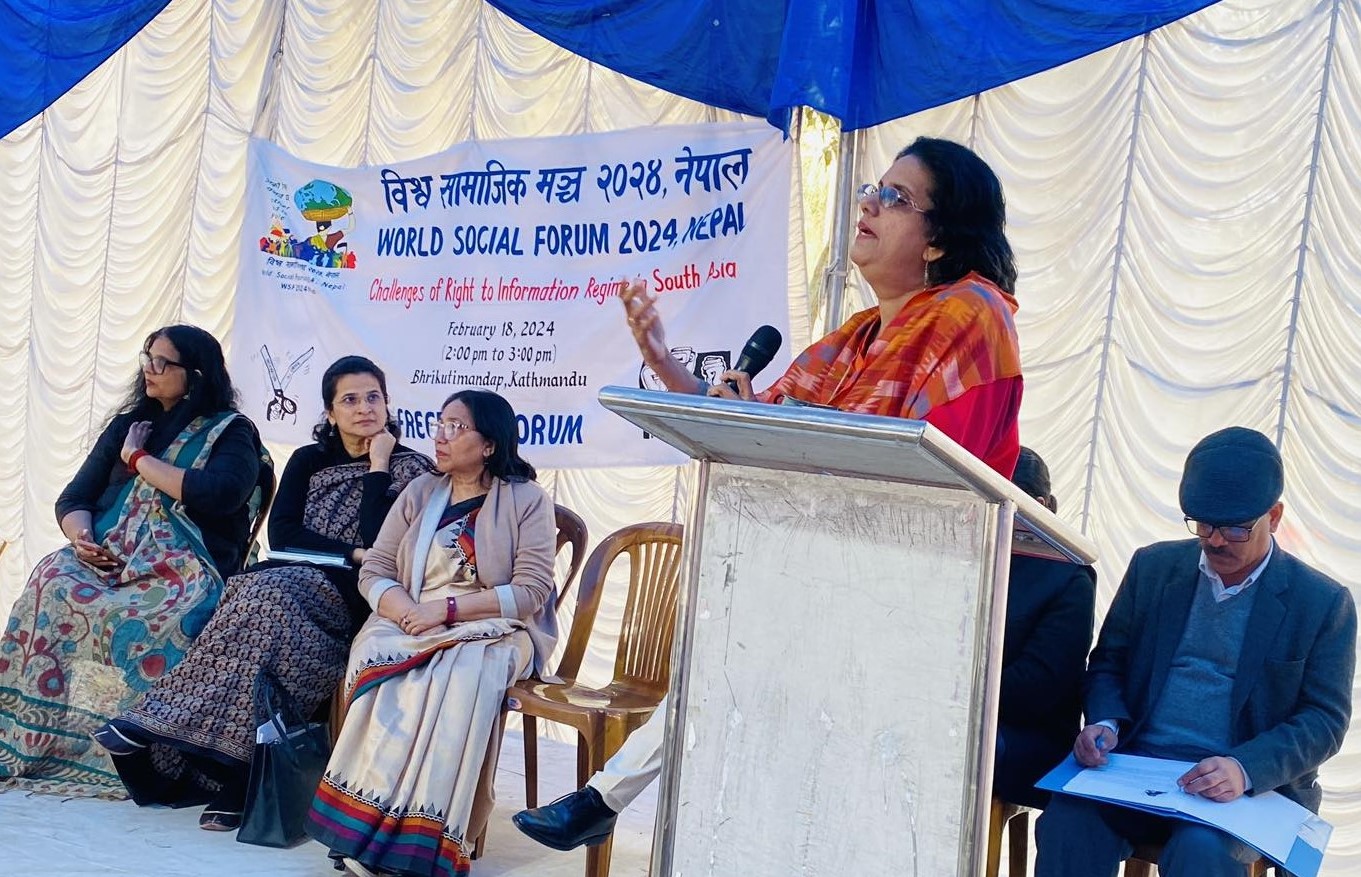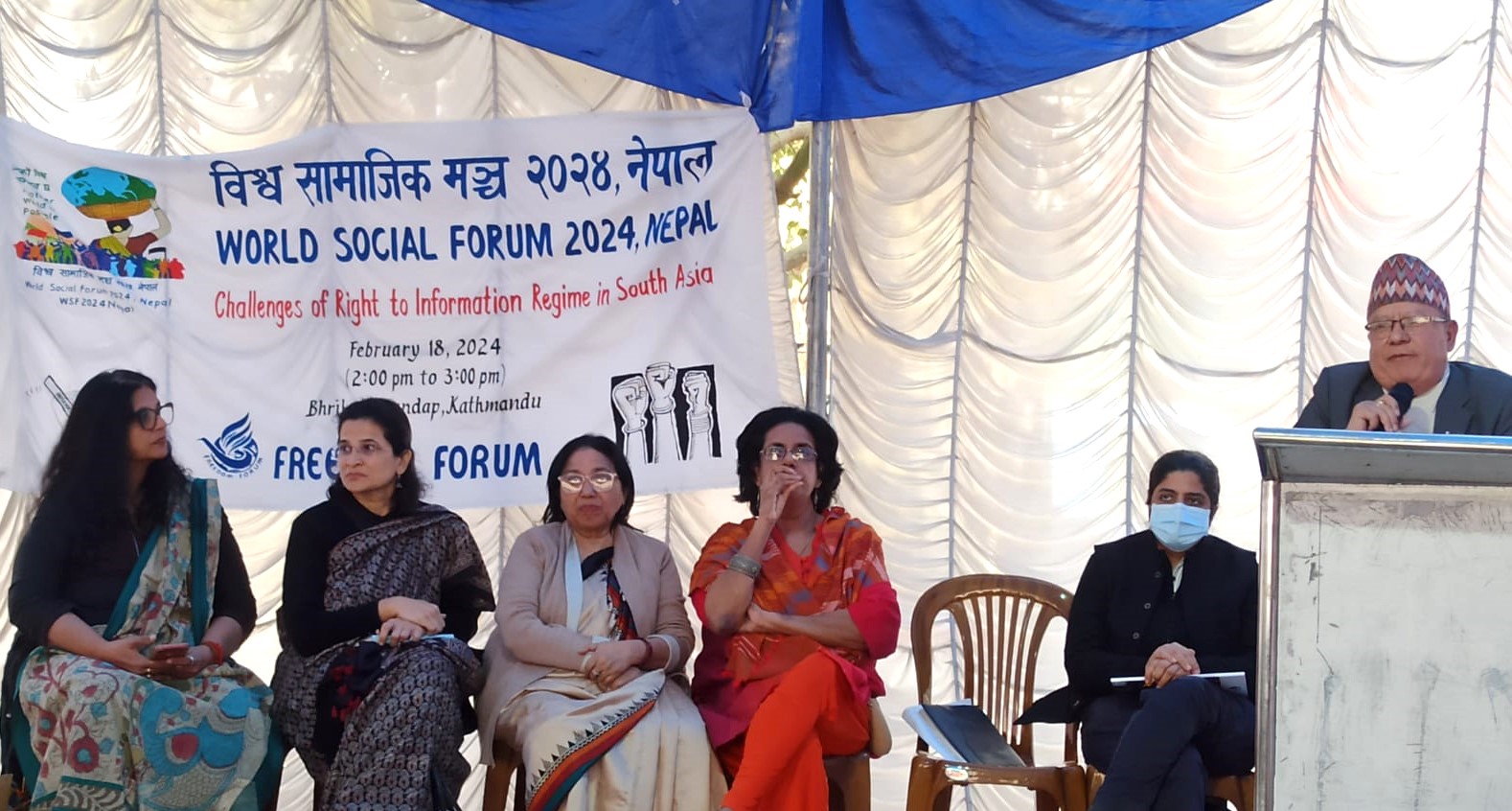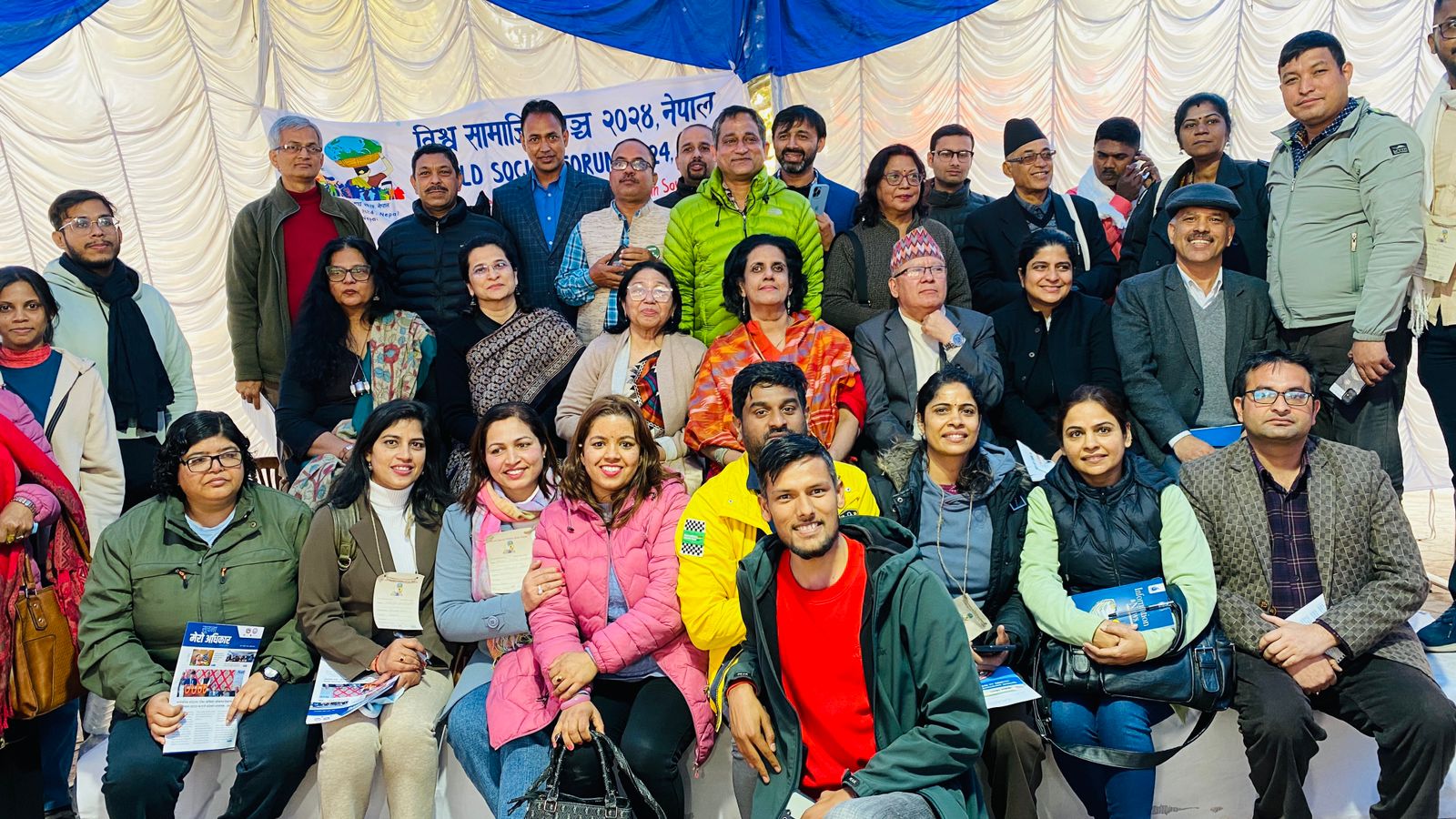
The south Asian activists and campaigners of right to information (RTI) vowed to work together and called for broader collaboration to augment RTI regime.
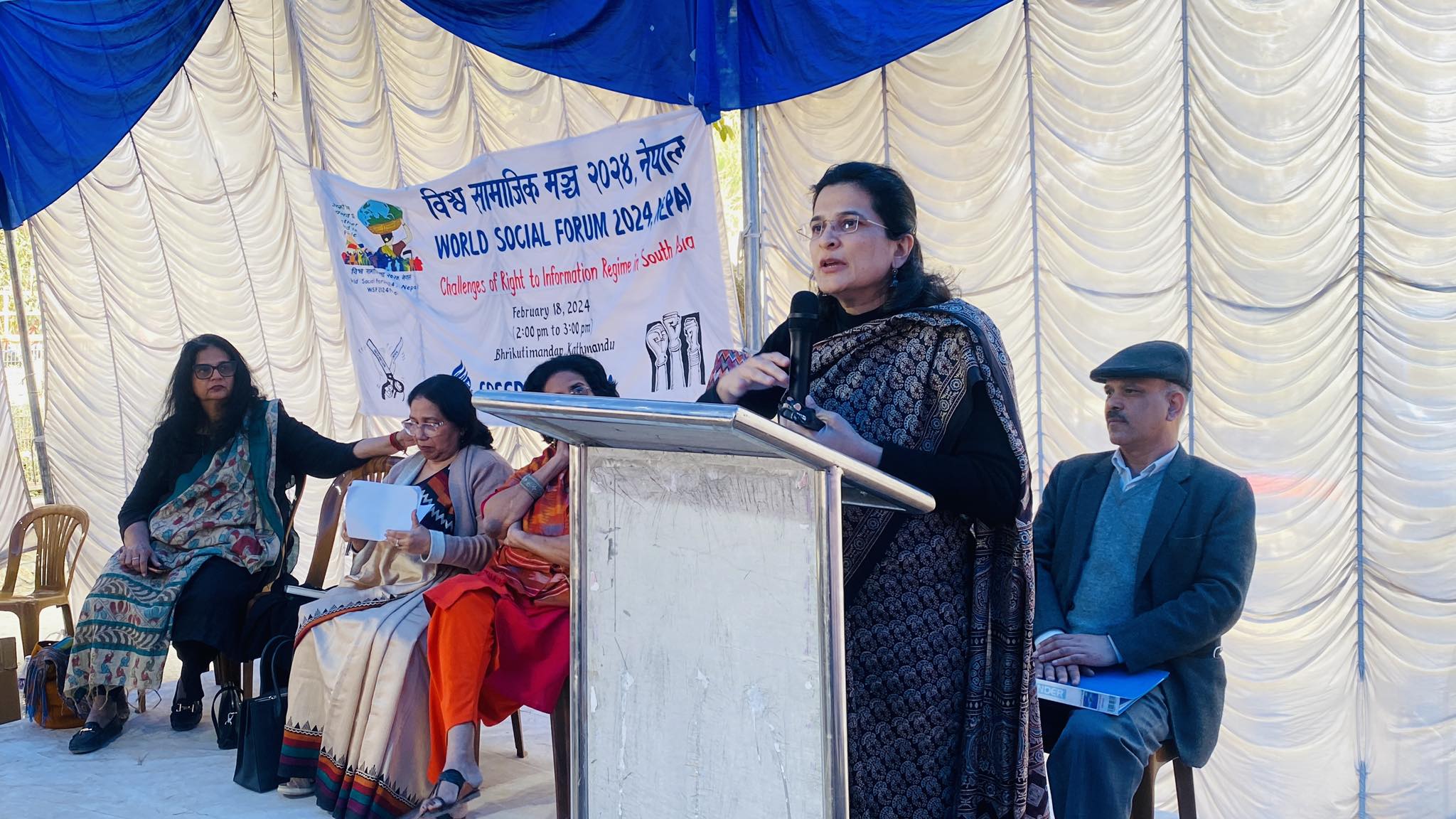
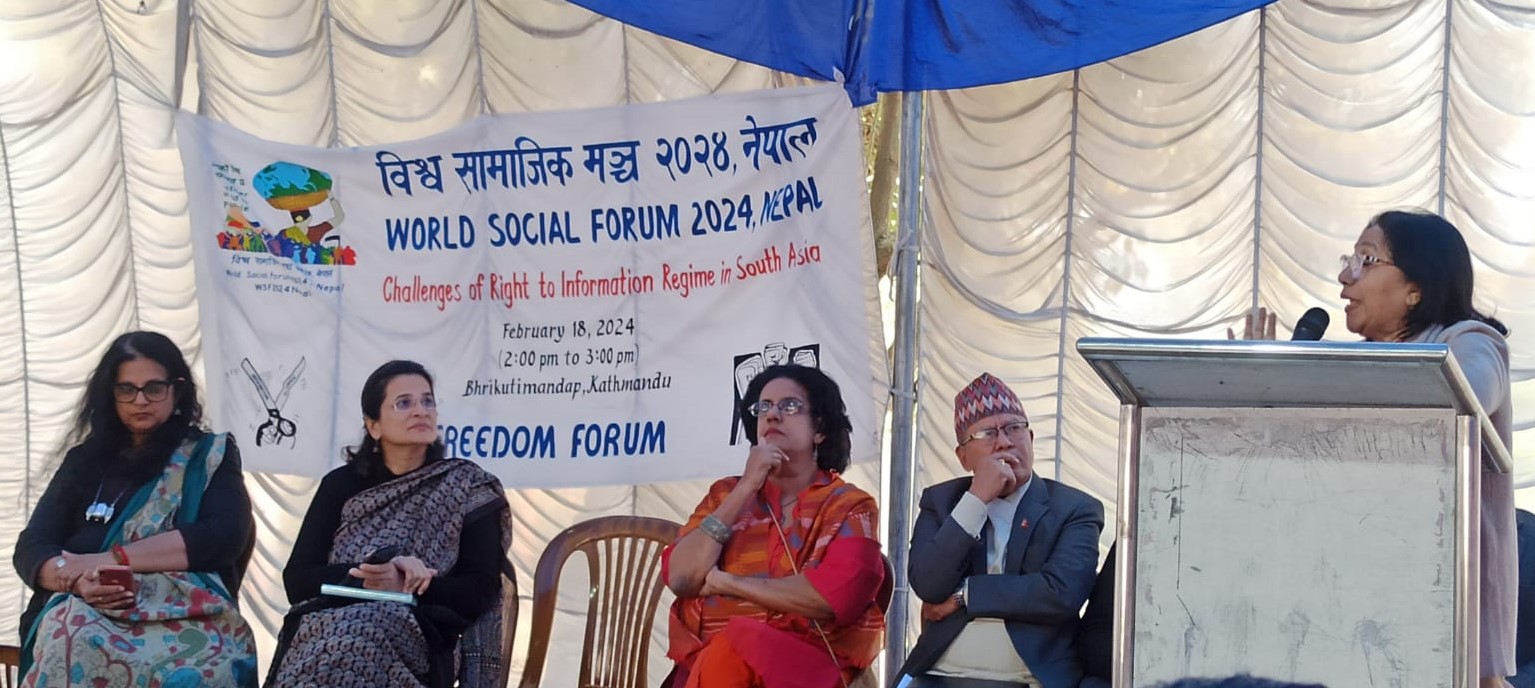
A discussion Freedom Forum organized as part of the World Social Forum 2024 in Kathmandu on February 18 witnessed approximately 100 participants ranging from Information Commissioners, RTI activists, civil society representatives to general citizens, where the speakers underlined the need to cement south Asian networking to keep alive RTI movement and frustrate push back against RTI in the region.
Opening the session, FF's general secretary Sanjeeb Ghimire said RTI is a powerful tool of good governance. "Although South Asian countries have RTI Act in place, its implementation is bleak," he said, adding one of the serious problems facing RTI is non-compliance of obligations by the public agencies. Hence, collaboration at regional level is essential for its effective implementation.
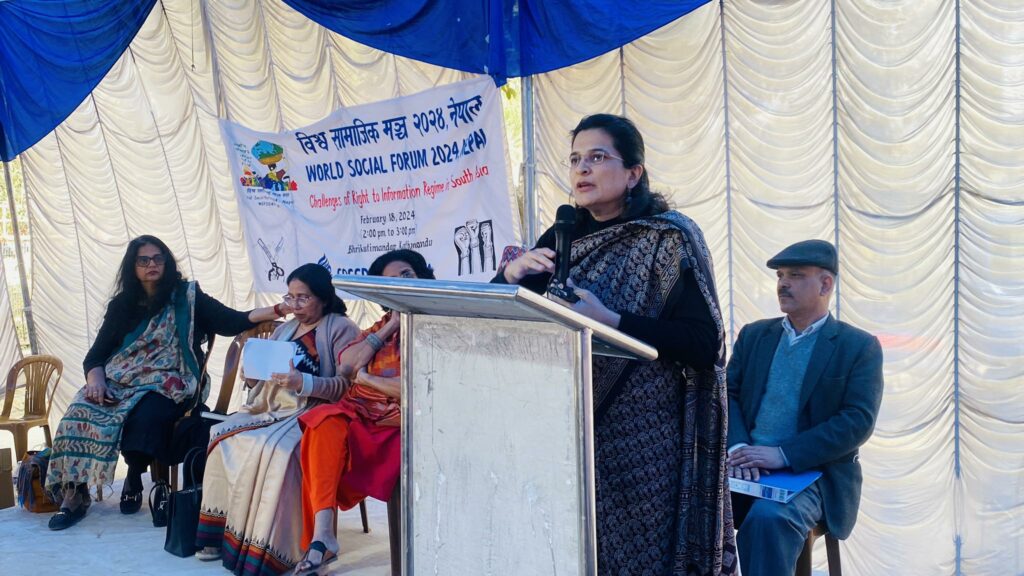
Following Ghimire, Executive Chief Taranath Dahal moderated the session. He introduced the panelists in the session. Panelists were noted RTI activists- Anjali Bhardwaj and Amrita Johri from India, Information Commissioner Kishali Pinto-Jayawardena and a social activist Sherine Xavier from Sri Lanka, civic activist Shaheen Anam from Bangladesh and Chief Information Commissioner Mahendra Man Gurung from Nepal.
Sharing that the south Asian countries were battling odds in the use of RTI, they hoped collaboration and network building in this sector could help build knowledge and experience for effective RTI campaign. They viewed expansion of RTI regime was imperative to hold authorities accountable and to guarantee people’s participation in governance and decision-making.
Prominent RTI activist from India, Anjali Bhardwaj, said, “As long as citizens are deprived of their access to information, democracy does not function well.” She, shared her experience of working for the rights to people in slum in India. The marginalized communities, who faced severe problems in India, were ensured rights with the use of RTI, Bhardwaj informed.
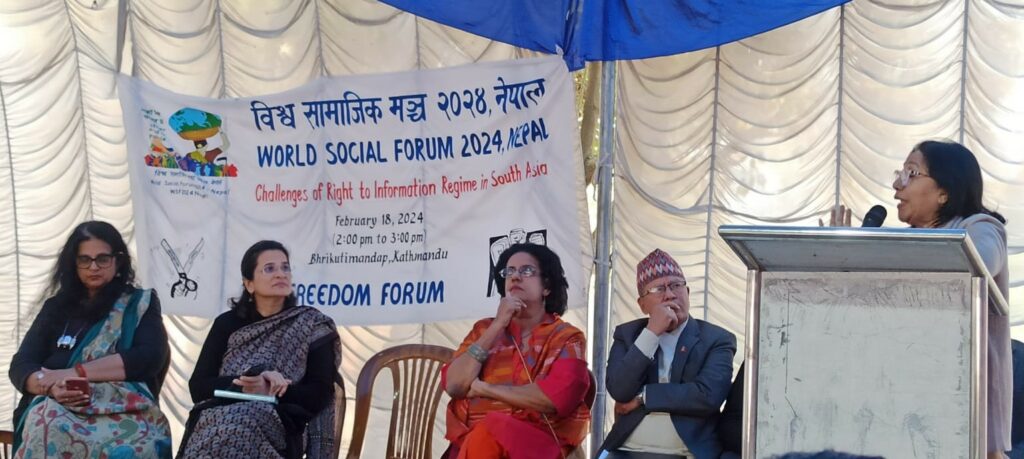
Also a Co-convener of RTI campaign in India, Bhardwaj, added that RTI is effective to hold public officials accountable and expose corruption in India. But its implementation has been weakened in the name of data protection after recent amendment of RTI law, she regretted.
Executive Director at Manusher Jonno Foundation of Bangladesh, Shaheen Anam, expressed worry over declining number of RTI applications in Bangladesh, she added, "Currently, information commissioner's appointment process has raised questions on autonomy of the commission. Hence, all sides’ cooperation is expected to reinforce RTI regime in south Asia."
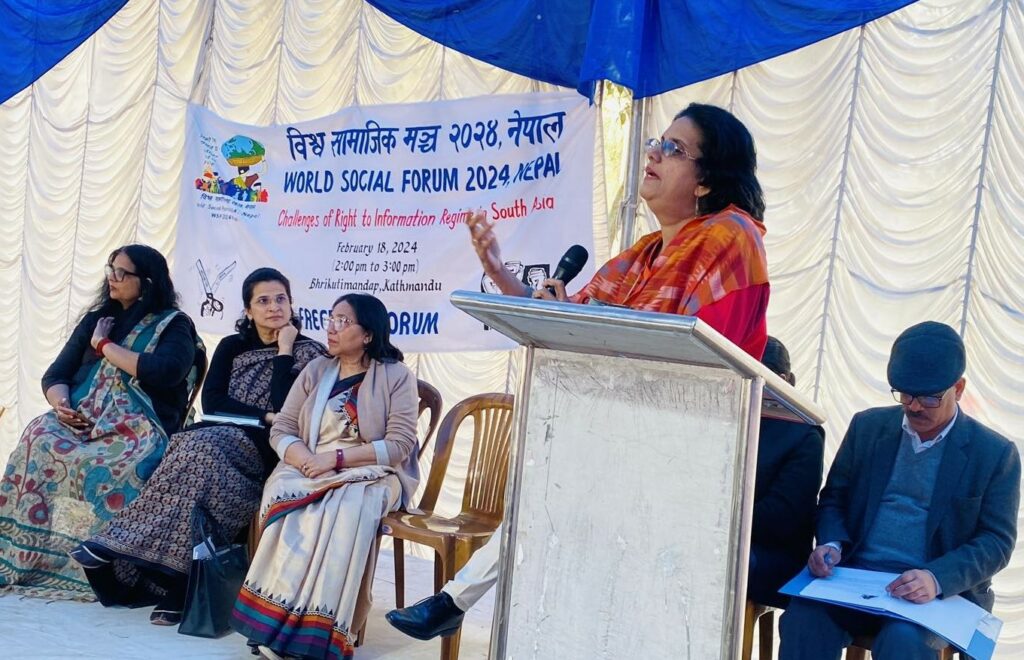
However, Executive Director at The Social Architects in Sri Lanka, Sherine Xavier, blamed that RTI campaign was still an elite movement in Sri Lanka. RTI movement is yet to reach the vulnerable people. Culture of secrecy is entrenched in Sri Lanka that is weakening RTI enforcement. Civil society could play role to popularize RTI in south Asia, she suggested.
Similarly, Chief Information Commissioner at National Information Commission,
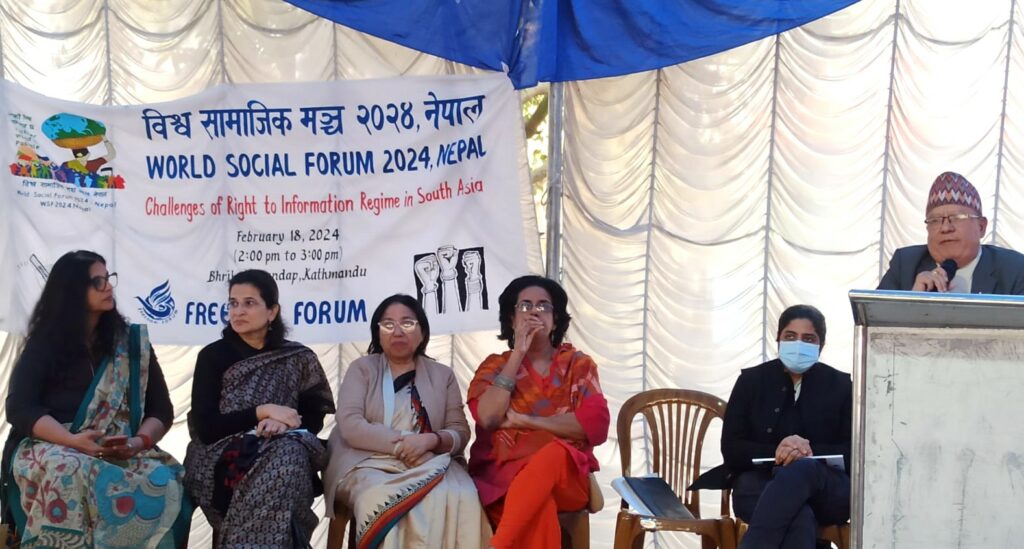
Working committee member of the National Campaign for People’s RTI from India, Amrita Johri, said RTI deeply reflects the health of democracy. "Push back against RTI in the region could be taken as opportunity to work together and keep RTI alive. "Rejecting people's RTI appeal over minor error by information commissioner in India is a worrying trend," she shared.
Freedom Forum Executive Chief Taranath Dahal commented that RTI is lifeline of democracy. “The RTI movement must not be weakened, but reinforced to ensure participatory democracy,” he said, expecting that the session would foster regional collaboration and national initiatives to take forward the RTI movements so that CSOs would contribute to good governance.
The WSF 2024 was held in Kathmandu from February 15 to 19, where thousands of organizations from over 90 countries had attended.