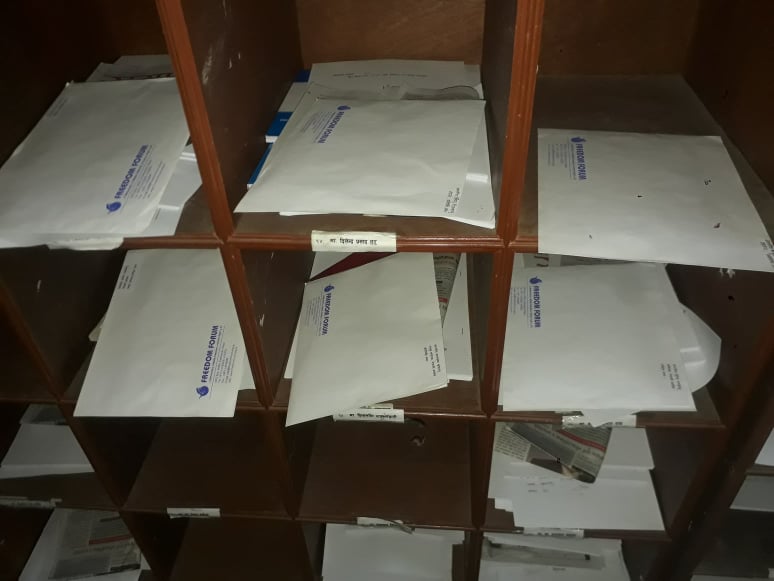
Freedom Forum has submitted the proposed amendments points and policy brief regarding Media Council Billto influential lawmakers from ruling and opposition parties in both upper and lower house of the parliament, ministry officials and other concerned stakeholders on 23rd May, 2019. The documents were shared via parliamentarian pigeonhole, emails, social media platforms and other means as well.
The bill which was registered on 10th May 2019, found to be reason of concern for various, media institution, editors, media-related CSO's and other stakeholders as the provisions were against the rights guaranteed by the constitution of Nepal. In this regards, FF has reviewed the bill and prepared policy brief and recommendations which need to be incorporated in the bill.

Furthermore, FF has suggested amendments to 20 provisions in 15 sections of the bill. The main recommendations are as follows: • Suggested appointing a retired justice of the Supreme Court as head of the proposed Media Council. • Similarly, two lawmakers from lower house and one from upper house recommended by the speaker of house and representatives and chairperson of the National Assembly (NA) respectively should be the member of council. • The president of FNJ, a professor or associate professor of journalism department at a university, one senior journalist from each Province, three journalist elected by FNJ and three noted personalities with experience in human right, gender and social inclusion, language, communication management or research are recommended as member of the council. • One senior journalist nominated by ministry and chief of the Department of Journalism and Mass Communication of TU are proposed as members. • Journalist involved in violation of the media code will be asked to make a public apology or face black listing or publishing of his/her name instead. • Exclude 'publisher' from editorial responsibility. • Revoke the provisions related togovernment directions to the council. • Incorporated and incite self-regulation provisions in the bill.