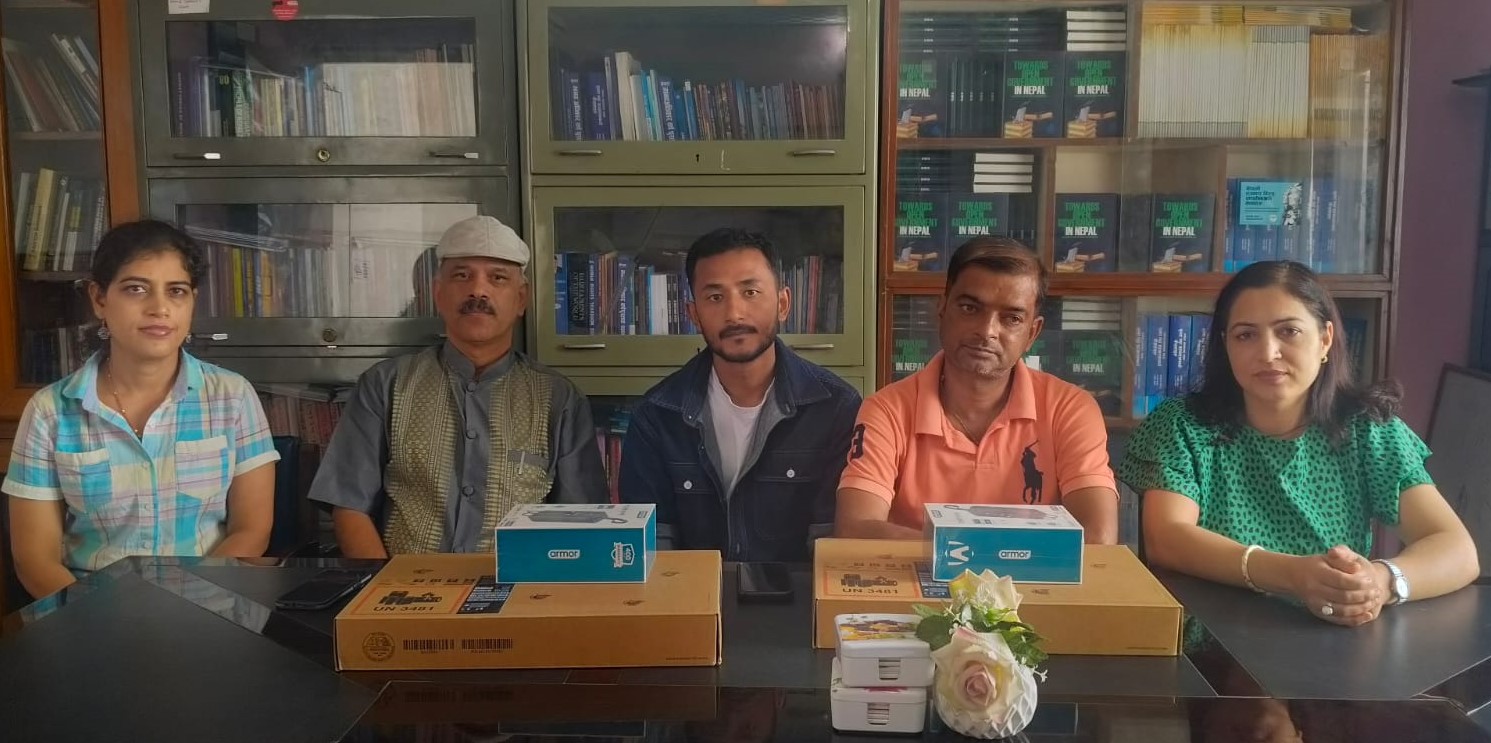
Freedom Forum joins more than 45 civil society organizations, academics and experts in respectfully urging the International Telecommunication Union (ITU) to ensure active participation of independent civil society organizations, academia and experts in the Commission.
These organizations jointly signed an open letter to ITU Secretary General further encouraging to establish mechanisms that enable civil society to provide their expertise and contribute meaningfully to the Commission’s work.
Read the full open letter here.
Dear Secretary-General Bogdan-Martin,
We, the undersigned individuals and civil society organizations, welcome the International Telecommunication Union's (ITU) continued leadership in fostering international dialogue on artificial intelligence through the AI for Good initiative and Summit, through its critical support to the UN Global Dialogue on AI Governance and, most recently, through the establishment of the AI for Good Global Commission.
Artificial intelligence presents extraordinary opportunities to advance sustainable development, improve public services, and accelerate scientific discovery. At the same time, it raises profound questions about human rights, democratic governance, accountability, equity, labor, environmental sustainability, and international security. Addressing these opportunities and challenges requires meaningful international cooperation, and we recognize the ambition behind the Commission in helping to shape that conversation.
We write, however, to express our concern about the apparent absence of meaningful civil society and academic representation in the Commission's membership and governance.
For more than two decades, the ITU has served as one of the principal custodians of the legacy of the World Summit on the Information Society (WSIS). That legacy fundamentally reshaped global digital governance by recognizing that governments and the private sector alone cannot address the complex policy challenges posed by rapidly evolving technologies.
Instead, WSIS established the multistakeholder model as a defining principle of Internet governance, one in which governments, the private sector, the technical community, academia, and civil society each contribute distinct expertise, perspectives, and sources of legitimacy.
As one of the organizations entrusted with carrying forward the WSIS process, the ITU has played a unique role in keeping this model alive within the United Nations system. Through initiatives such as AI for Good, its role in the Internet Governance Forum and the UN Global Dialogue on AI Governance, and its broader work on digital cooperation, the ITU has consistently affirmed that effective governance depends on openness, transparency, and meaningful participation across stakeholder groups.
The multistakeholder model is not simply an institutional arrangement or a distribution of seats around a table. As the Net Mundial Internet Governance Process Principles 2014 highlight, a democratic multistakeholder process is one that ensures the meaningful and accountable participation of all stakeholders, including governments, the private sector, civil society, the technical community, the academic community and users, as per their respective roles and responsibilities. It is important to create the democratic space for diverse communities to deliberate openly, articulate and debate diverse interests, challenge one another's assumptions, and build outcomes that command legitimacy because they reflect a broad range of expertise and lived experience, especially of affected communities.
The strength of multistakeholder governance lies in its ability to manage disagreement transparently, build trust across communities, and produce more durable and legitimate outcomes through inclusive participation. Against this history, the limited presence of civil society within the AI for Good Global Commission is difficult to reconcile with the governance principles that the ITU has spent more than two decades helping to advance.
This question is particularly important because many global discussions on AI governance are already perceived as increasingly top-down and undemocratic . While governments and industry are indispensable participants, AI governance cannot be shaped solely by state and corporate perspectives.
Civil society organizations and academics are uniquely positioned to articulate and advocate around the wide range of human rights and development impacts that AI creates, encompassing a range of fundamental human rights and freedoms, including children’s rights, access to information, free expression, privacy, non-discrimination, labor protections, environmental sustainability, consumer protection, and democratic accountability. Civil society and academia have often served as the bridge between international policymaking and the communities most directly affected by technological change. The UNESCO Recommendation on Open Science further highlights that, beyond the scientific and technical community, the meaningful engagement of civil society, and broader societal actors
is essential. In the context of AI governance, perspectives that may be considered non-technical remain critical to ensuring that deliberations are grounded in societal needs, lived experiences, and human rights. Indeed, we are particularly appreciative of the efforts of the Co-Chairs of the UN Global
Dialogue on AI Governance and all parts of the UN supporting this critical effort, including the ITU, to meaningfully include civil society organisations and academia. Yet across many international AI processes, opportunities for meaningful civil society participation remain limited. Too often, civil society and academia are invited to observe rather than participate, to comment after priorities have already been established, or to engage through consultation processes that have little influence over outcomes.
At a time when AI systems are becoming increasingly powerful and deeply embedded in societies, meaningful civil society and academic participation is not optional; it is essential. Governance frameworks must be informed by those whose work centers on protecting the public interest, promoting inclusion, and ensuring accountability. Without those perspectives, AI governance risks becoming less responsive, less trusted, less accountable, and ultimately less effective.
The ITU has earned global respect for its role in advancing international cooperation and for preserving the multistakeholder spirit that emerged from WSIS. The establishment of the AI for Good Global Commission offers an opportunity to demonstrate that international AI governance can remain faithful to the multistakeholder principles that have guided Internet governance for more than twenty years. Doing so requires more than consultation. It requires ensuring that civil society and academia can participate meaningfully in shaping priorities, informing deliberations, and contributing to outcomes from the outset.
We therefore respectfully encourage the ITU to provide opportunities for meaningful, independent civil society and academic participation within the Commission itself and also establish structured mechanisms through which civil society expertise can meaningfully inform its work on an ongoing basis.
We also respectfully ask the ITU to clarify the role of the Commission vis-a-vis the UN Global Dialogue on AI Governance, the Independent Scientific Panel, and other key initiatives across the UN system. At a time when there are multiple AI governance processes ongoing, understanding their complementarity is key for strategic engagement.
We offer these observations in a spirit of partnership and with a shared commitment to ensuring that international AI governance remains inclusive, transparent, rights-respecting, and genuinely multistakeholder.
Many representatives from the undersigned individuals, academia and civil society organisations are in Geneva this week (6-10 July), providing an opportunity to discuss this matter in person. We understand that schedules are incredibly busy, but if the opportunity presents itself, we would greatly value a meeting with you.
We stand ready to contribute under your leadership.
Sincerely,
The undersigned civil society organizations, academia and individuals
Organisations
Ada Lovelace Institute
Amaranta
Arab Reporters for Investigative Journalism (ARIJ)
Association for Progressive Communications (APC)
Centre for Communication Governance, National Law University Delhi
CCAOI
Center for Democracy & Technology
Center for the Study of Organized Hate (CSOH)
Centre for Artificial Intelligence Ethics and Governance in Africa (CAIEGA)
Centre for Artificial Intelligence and Multidisciplinary Solutions in Africa (CAIMSA)
Collaboration on International ICT Policy in East and Southern Africa (CIPESA)
Committee to Protect Journalists
Data Privacy Brasil
Derechos Digitales
Digital Rights Foundation (DRF)
Digital Rights Nepal (DRN)
Diversa
European Center for Not-for-Profit Law
Freedom Forum, Nepal
Fundación Karisma
Global Network Initiative
Hiperderecho
International Foundation for Electoral Systems (IFES)
InternetLab
IT for Change
KICTANet
Lawyers Hub Africa
Mtoto News
ONG Amaranta Chile
Paradigm Initiative
Penn Center on Media, Technology, and Democracy (Penn MEDIATED)
Southeast Asia Freedom of Expression Network (SAFEnet)
Tech Global Institute
The Future of Free Speech
WITNESS
Women of Uganda Network (WOUGNET)
5Rights Foundation
Individuals
Dr. Konstantinos Komaitis
Dr Sanjana Hattotuwa
Francesca Bosco
Dr. Margaret Nyambura Ndung’u
Prof. Dr. Joan Barata Mir
David Kaye
Iria Puyosa, PhD.
Linda Bonyo
Paola Gálvez Callirgos
Professor Sonia Livingstone
Dr. Courtney Radsch